

Under Pressure
An exploration of Jazz and The Human Experience

A curated playlist for this article can be found here.
At the time of writing this, it’s been a tough couple of days. When I think about the work that I’ve set myself to, it is easy to be overwhelmed by the feelings of inadequacy and unpreparedness. It’s one of those moments on the trail that you can see the mountain looming down the path and you just know it’s a tough stretch to get there. But, the only way through it is through it and it has me thinking a lot about jazz today.
The weekend I decided to leave Phoenix and move to San Francisco in 2023, I was sitting with two of my dear friends. They were creating space for me to process and asking me good questions that helped me see the shape of my soul that evening. At one point, my friend turned to me and said “I’m not sure what the future holds for you, and I don’t know the next step you’ll be taking but two things I’m certain of is that 1. You’re going to take a step and 2. It’s going to be jazzy”. He did not intend for this to be profound or super impactful, but here I am, over a year later still letting that word warm my spirit.
Jazz & Pressure
In the last decade, I have come to deeply love Jazz. Jazz, rooted in the Black community of New Orleans, is one of the few truly American art forms. It has traveled the globe, leaving its mark in places like Brazil, Ethiopia, and Cuba. What I love most about jazz is how musicians master the rules so they can break them, creating something uniquely their own. Thelonious Monk, Charles Mingus, John Coltrane—these legends didn’t replicate music; they unashamedly sounded like themselves. That speaks deeply to my soul.
However, the reason I find myself writing to you is not to inspire you with some tale of self-discovery. On the contrary, I have been considering Jazz in a new perspective today, one that I think you’ll find hope in, as I have on a tough day like today. Jazz is all about pressure.
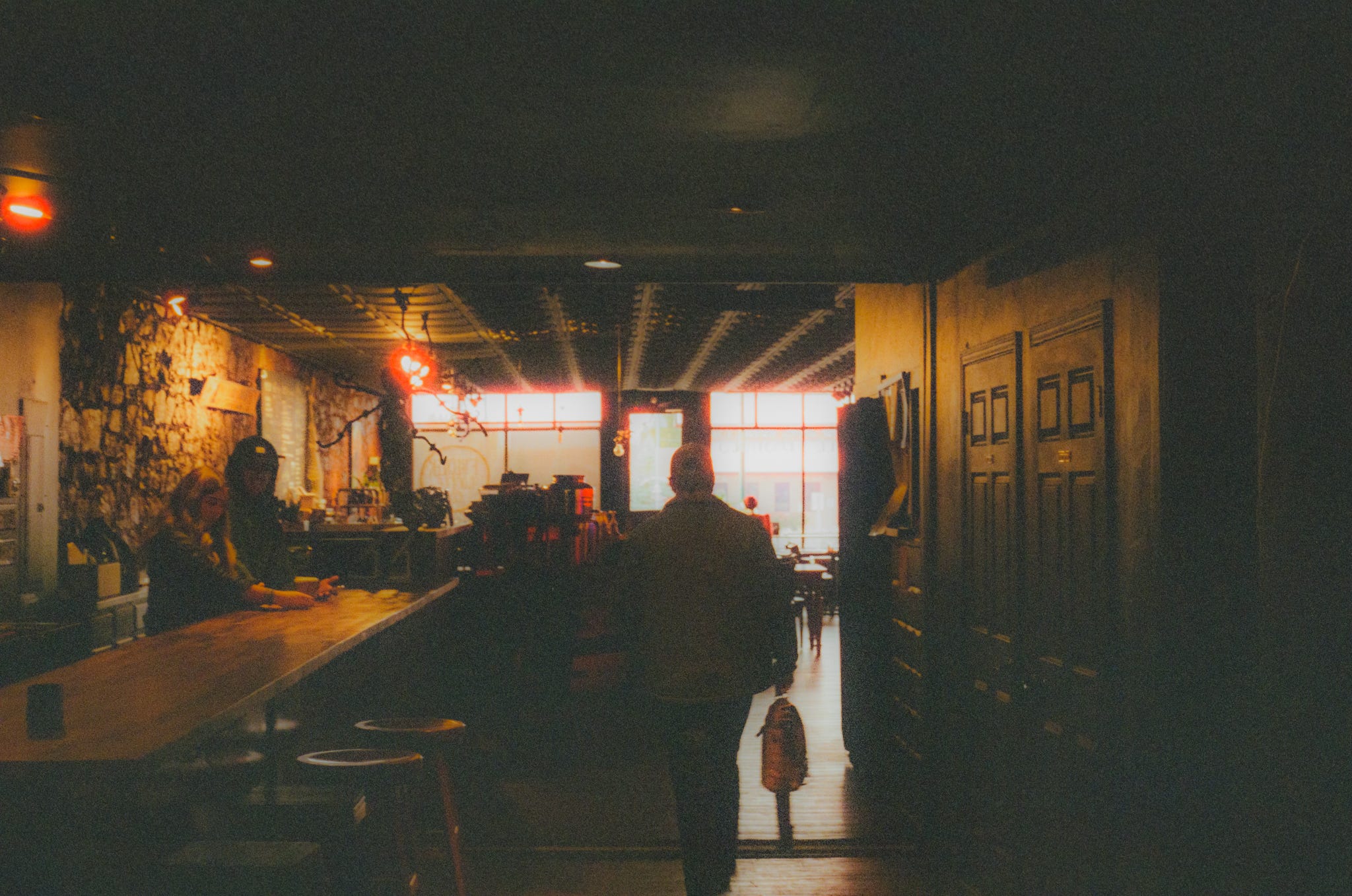
If you were to walk through Harlem on a summer evening in the 1930’s, the world would be filled with the sound of jazz musicians, any number of establishments could be hosting one or more of the people who would become legends. If you were to duck inside one you would be greeted with a smoky, hot room with a center stage and a bar in the corner and, depending on the evening, it would likely be standing room only. You would be surrounded by the people who would eventually march in the civil rights movement and lead our country through a tumultuous and necessary change that we are still working through today. And in the background of all of that potential, you would hear the wailing of the saxophone and the pounding of the keys. This music would become part of the soundtrack to the civil rights movement and would be one of the great bridges between the cultural divides. Which, in my opinion, it still serves as today.
The conversation between the beat and the rhythm is meant to build pressure throughout the song, to energize, to invite, to play upon. It is the establishment of pressure that drives the musician and the crowd forward into shared experience. On an even more practical level, the sax, the trumpet, the trombone cannot play without the use of pressure from the people wielding them. Pressure is a necessity if you want to produce good jazz and I think there is something there that resonates throughout the human experience.
I find myself in a season of building pressure. Nothing has happened as I had expected it to. I left Phoenix, I moved to the Bay, suddenly I’m living in Montana and now moving back to Phoenix? I quit my very stable job to move home for 10 months to take care of my brother and help my family. Now I find myself starting my own business and moving in a direction that is fully dependent on how hard I am willing to work. It feels like it all rests on my shoulders. I can hear the building of drums behind me, the deep thrum of the bass in the corner, the other horns have stepped back into rhythm with the beat. The heat from the room is rising as smoke hangs thick from the rafters. A spotlight illuminates my diminished form from the back of the stage, and I am invited into a solo. Pressure.
Without this pressure, though, I will never move. If the spotlight never hits me, I will never leave the safety of beat and rhythm. I will never take that step that will be jazzy. I can almost hear the intake of breath from the Creator as He prepares to play.
It’s a gnarly thing, pressure. It can destroy and it can create. The pressure that crushes stone is the same pressure that forges diamond. It all comes down to what we choose to do with it.
Jazz & Choice
As I said before, in jazz, musicians bend the rules, not because they don’t exist, but because they've mastered them. Autonomy, for me, is similar. It’s not about rejecting structure entirely but understanding the rules enough to choose how to move with and against them.
One thing you may have picked up on at this point if you’ve been following my other writings, I believe very strongly in personal autonomy. One of my rules of life is: nobody can tell you what to do. I believe that I have far more autonomy than our culture wants us to be aware of and this mindset that helps me utilize pressure to live a good life. I don’t have to pay your taxes, I don’t have to do my homework, I don’t have to take care of my family or pets. I can choose not to do these things. If I do choose not to, there are still consequences like going to jail, failing a class, losing your loved ones, but I can still choose not to do those things.
This is an extreme example of what I mean when I say nobody can tell you what to do. In most circumstances, it would be foolish to make any of those choices I listed above, but the fact remains that you can choose them. This truth is on the forefront of my mind and it allows me to not become a victim to my life. My vocabulary has changed significantly because of it; I don’t “have” to go to work, the gym, bed, etc. I am choosing to go to these places because that choice aligns with what I want to accomplish.
In the same way, when I feel the pressure of difficult relationships it has become a freedom to remind myself, I can set this down at any point and walk away. I am not stuck in the pressure chamber of friendship and when I let myself remember this, it becomes easier to choose to work on restoring the relationship rather than letting the pressure continue to build.
The big questions we must wrestle with as we come to live in this truth is: What do I actually want to choose and what does that choice say about who I am and where I am going?
There is a quote that is in multiple places in my home. “Direction, not intention, decides destination”. If I want to live a healthy life but keep choosing unhealthy habits, I’ll never get there. Our choices reveal our true direction, and aligning those choices with our intentions allows us to use pressure for growth, not destruction.
Still, sometimes no matter how intentional we are with our choices, things still go off the rails. To return to the imagery of jazz, even the greats still played off beat sometimes, tried something that didn’t work, or missed a crucial note. The beautiful thing about it is that they played on and often incorporated the mistake into the composition.
Tying it Together
In Jazz, even missed notes become part of the composition. This brings to mind the Japanese philosophy of Wabi-Sabi, which sees flaws as opportunities for beauty. Also, Kintsugi, the art of repairing pottery with gold, celebrates breakage rather than hiding it. Like jazz, it transforms imperfections into features. As Leonard Cohen sang, “There is a crack in everything, that’s how the light gets in.
I am also reminded of the Taoist principle of wu wei (effortless action). Wu wei does not reject pressure but teaches alignment with it. Like improvising in jazz, Taoism suggests that moving with the pressure rather than resisting it allows one to harmonize with life. Lao Tzu has this concept in the Tao Te Ching (paraphrased): Water is fluid, soft, and yielding. But water will wear away rock, which is rigid and cannot yield. As a rule, whatever is fluid, soft, and yielding will overcome whatever is rigid and hard. This is another paradox: what is soft is strong.
In Judaism and Christianity, we see the embracing of pressure in a number of places. The most significant being Jacob wrestling with God in the Old Testament. Through this process, Jacob receives his new name Israel, which means “one who wrestles with God”. This, to me, invites us to see places of struggle and pressure as sacred spaces where transformation happens, and identity is formed.
If you go pick up a jazz album today from some of the greats, you’ll might see three or four versions of the same song on there. This is because jazz isn’t about the perfect replication of a song but making the song sound most like the person who is playing it. So, when you’re invited to step out on to that stage and solo, remember that you’re there to sound like yourself, not replicate whatever perfection looks like in your head. Move with the pressure and find yourself playing on the rhythm and beat of life.
If you find yourself in a tough spot like I was, remember: Jazz isn’t about perfection. It’s about sounding like yourself. When the spotlight finds you, step into the solo. Use the pressure to create, not destroy. Take a breath, look around, and keep going. The path winds through valleys and mountains—you’re not alone.
Love this Charlie. Play on!🎶🎷